Building a Crew That Holds Corners in Hood Warfare
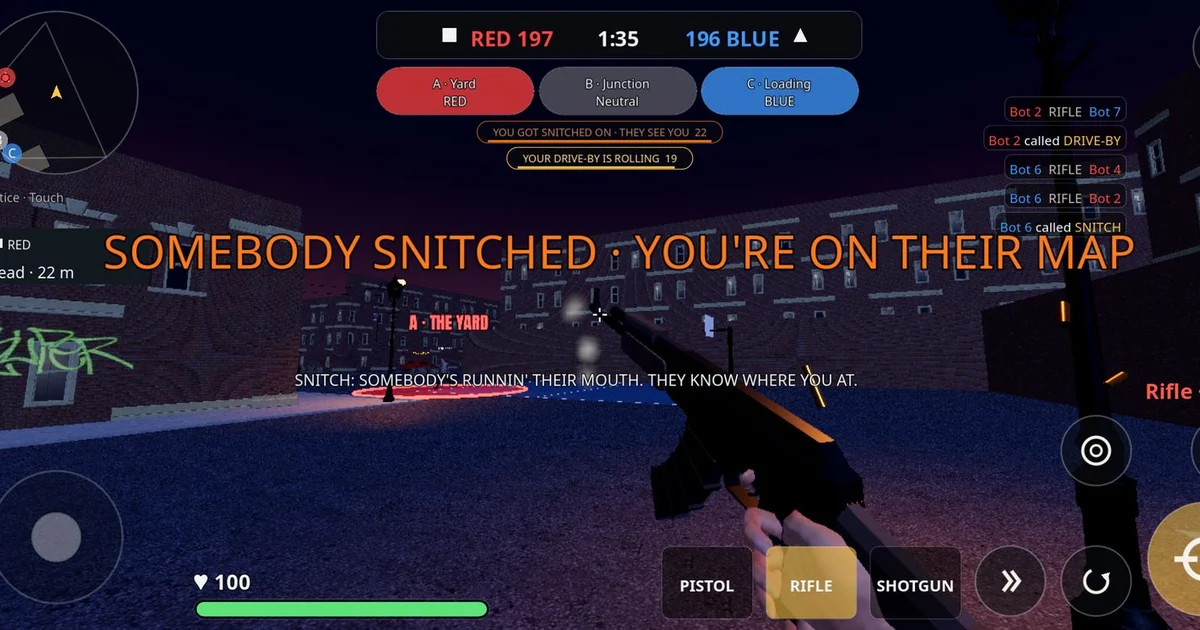
Hood Warfare is a 4v4 turf-war shooter where two crews fight over three corners: the Yard, the Junction, and the Loading Dock. Solo players can do well in it, but the match is built around coordination. Rep earned during a fight becomes call-ins, and the value of those call-ins depends on whether your four players are thinking about the same objective at the same time. This article looks at how a crew can organize its play, what to discuss before a match, and how to judge whether your group is actually getting better.
Decide who does what before the first drop
A crew of four has more useful combinations than a crew of four people guessing. Before you queue, agree on rough roles without locking anyone in. One player can take the lead on pressing a corner, another can stay back to cover the flank, a third can handle rep decisions, and the fourth can watch the sightlines that the others leave open. These labels are not rigid. What matters is that each player knows who is expected to look where when a push begins.
Rep is the resource that most often separates organized crews from loose ones. Because rep is spent on snitch, homies, and drive-by, a crew should talk about what it wants to buy before the spending is urgent. Snitch reveals enemies, which helps a crew that has lost track of where the other side is hiding. Homies provide AI backup, which is useful when a crew wants a second body at a corner. Drive-by is most valuable when a crew is already committed to an approach and needs a quick way to reshape the fight. If only one player is spending rep, the crew can end up with purchases that do not match its plan. Agreeing on priorities ahead of time avoids that.
Use the three corners as a shared map
Turf war gives you three points of control, and a crew performs best when it has a common language for them. Name the Yard, the Junction, and the Loading Dock in your voice chat or text messages and use the same names every time. Short, consistent callouts save seconds, and seconds are the currency of a fast shooter.
A practical habit is to assign one player to remember the state of each corner at all times. When a crew loses track of which point is contested and which is secure, it tends to over-rotate, sending everyone to one place while a second position goes quiet. Ask the same question at the start of each round: which corner is most at risk, and which can we leave with a single player? Reviewing that question every time you respawn builds a sense of tempo that teams without a plan rarely develop.
Plan around the RPG and the roof stashes
The RPG cannot be bought. It spawns in roof stashes and, once picked up, marks its carrier on radar. That single rule changes how a crew should think about the heavy weapon. Whoever grabs it becomes a visible target for the entire enemy team, so the crew should decide in advance who is allowed to take that risk and what support that player will have. Sending a lone player up to a roof with no one covering the approach usually ends in a quick loss of the weapon and a free kill.
A better approach is to treat the RPG as a team event. When a stash is spotted, one player moves toward it while another positions to cover the carrier's exposure from the direction the enemy is most likely to come from. Once the weapon is secured, the crew can decide whether to use it to push a corner or to hold a position against a rush. Players who switch between first and third person during a match can also use the perspective change to scout ahead or check angles before committing a shot.
A short checklist for crew reviews
After a session, a crew can improve faster by asking a few plain questions rather than debating who made the best kill. Did we agree on roles at the start, and did those roles hold once the first corner fell? Did we spend rep on purchases that matched our plan, or did we buy reactively? Did we lose a corner because we left it unattended, or because we over-committed to a different one? Did anyone take the RPG without support, and what happened next?
Keep the answers short and specific. Writing down two or three recurring problems across several matches tells you far more than a single bad round. Pay attention to whether the same corner keeps falling, whether rep is always spent at the same moment, and whether one player repeatedly ends up isolated. These patterns point directly at the habits to fix. Over time, a crew that reviews honestly and adjusts its roles and callouts will usually see its turf-war results become steadier, even if the individual skill of its members stays about the same.